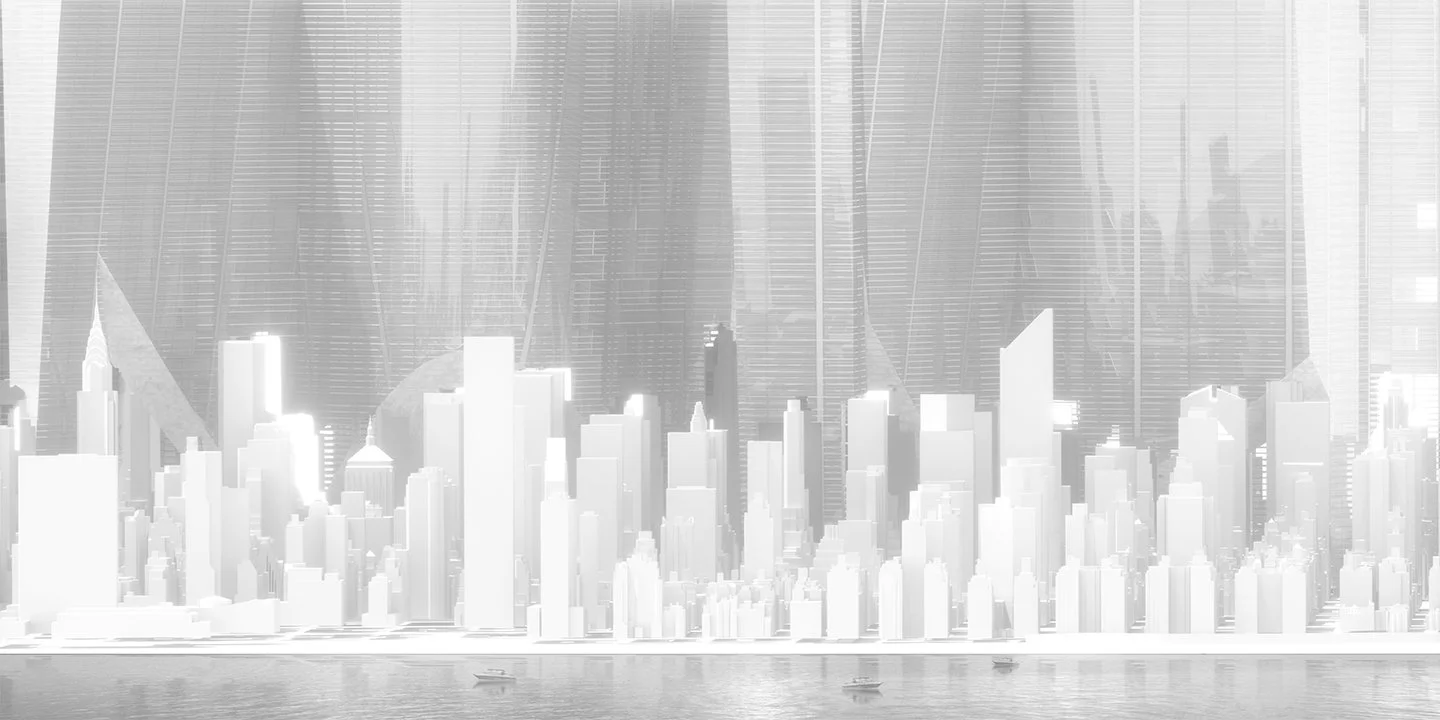
Grand Central Canyon
Manhattan, New York 2013
“When he arrived in Manhattan for the first time, in 1935, he held a press conference at which he described even the Empire State Building as too small and claimed the city’s leaders were too timid to hire him. He later described the height of Manhattan’s towers as “nothing more than the manifestation of an inferiority complex.” He also wrote an opinion piece in the New York Times in which he claimed that “American skyscrapers have not attained the rank of architecture; rather, they are merely small objects such as statuettes or knick-knacks, magnified to titanic proportions.” In their stead, he proposed a city of buildings that “don’t try to outdo each other but are all identical,” with highways running right to their front doors—he believed the city’s grid system was obsolete in the automobile age. Le Corbusier met with many of the city’s power brokers, including Nelson Rockefeller, who was then running his family’s real estate business. Le Corbusier pitched an early version of his Unite d’Habitation, but after two months with no commissions, he returned to France, dazzled and disappointed.”
-----Le Corbusier and New York City: A Love-Hate Relationship/Fred A. Bernstein
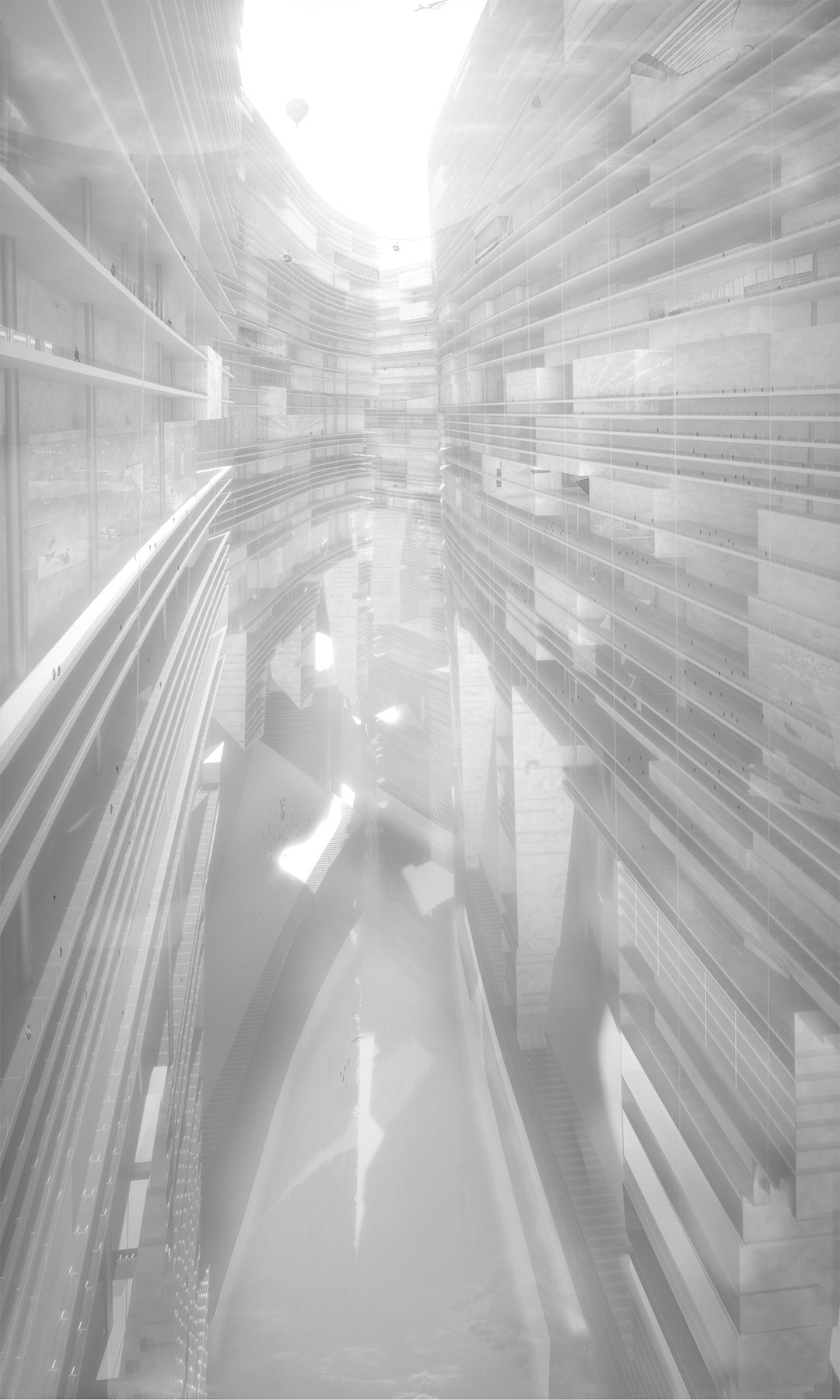
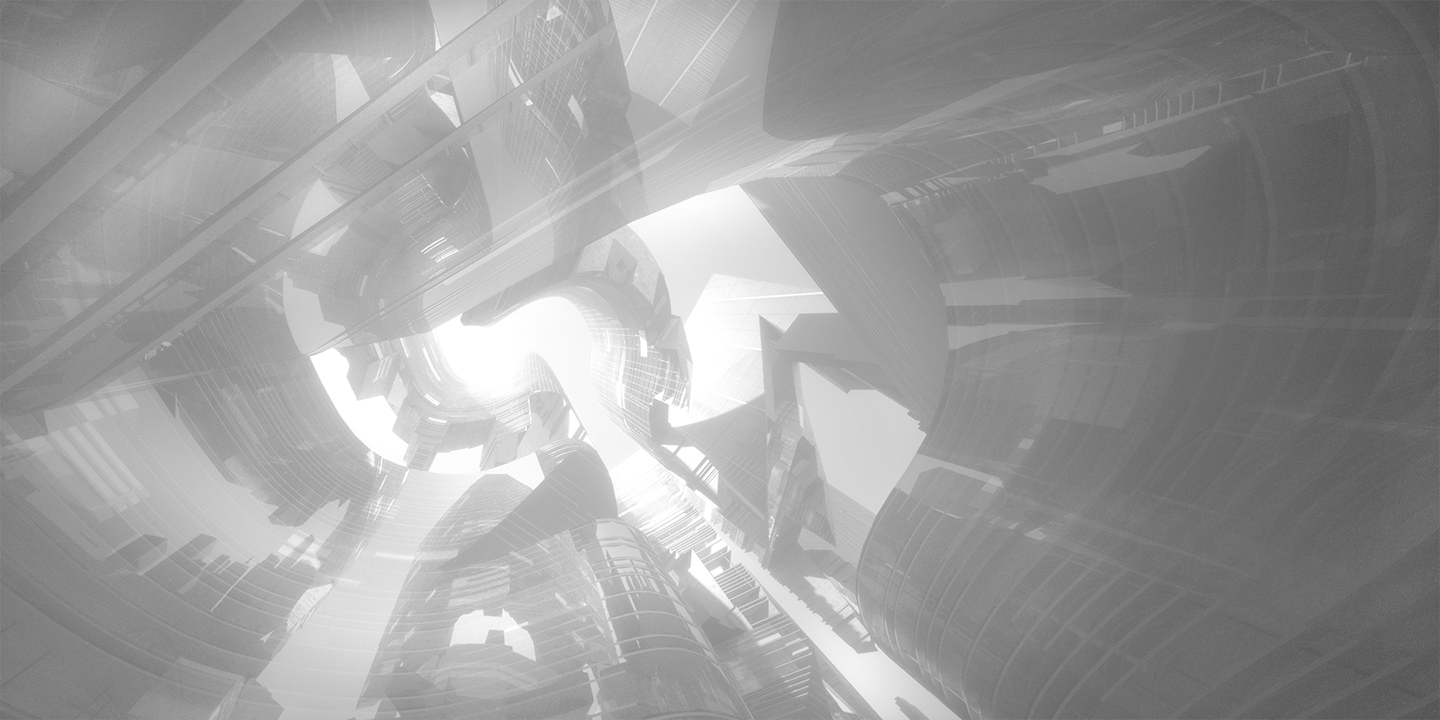
As one of the world’s great global cities, New York City must continue to cultivate opportunity and nurture innovation in every field. The Grand Central Canyon will give the city a new vision for future generations. It is better to have a building which is powerful enough to give people a new space, a new skyline, and new urban sublime and stuplime.
Sublime adjective \sə-ˈblīm\
An object which mixes the elements of large scale, high contrast, dynamic, infinity, and dark that display an extremely powerful tension that generates a reaction of astonishment to subjects.
Stuplime adjective \stü-'plIm\
From Ugly Things, Sianne Ngai, Stuplime be defined as “the aesthetic experience in which astonishment is paradoxically united with boredom” (P271)
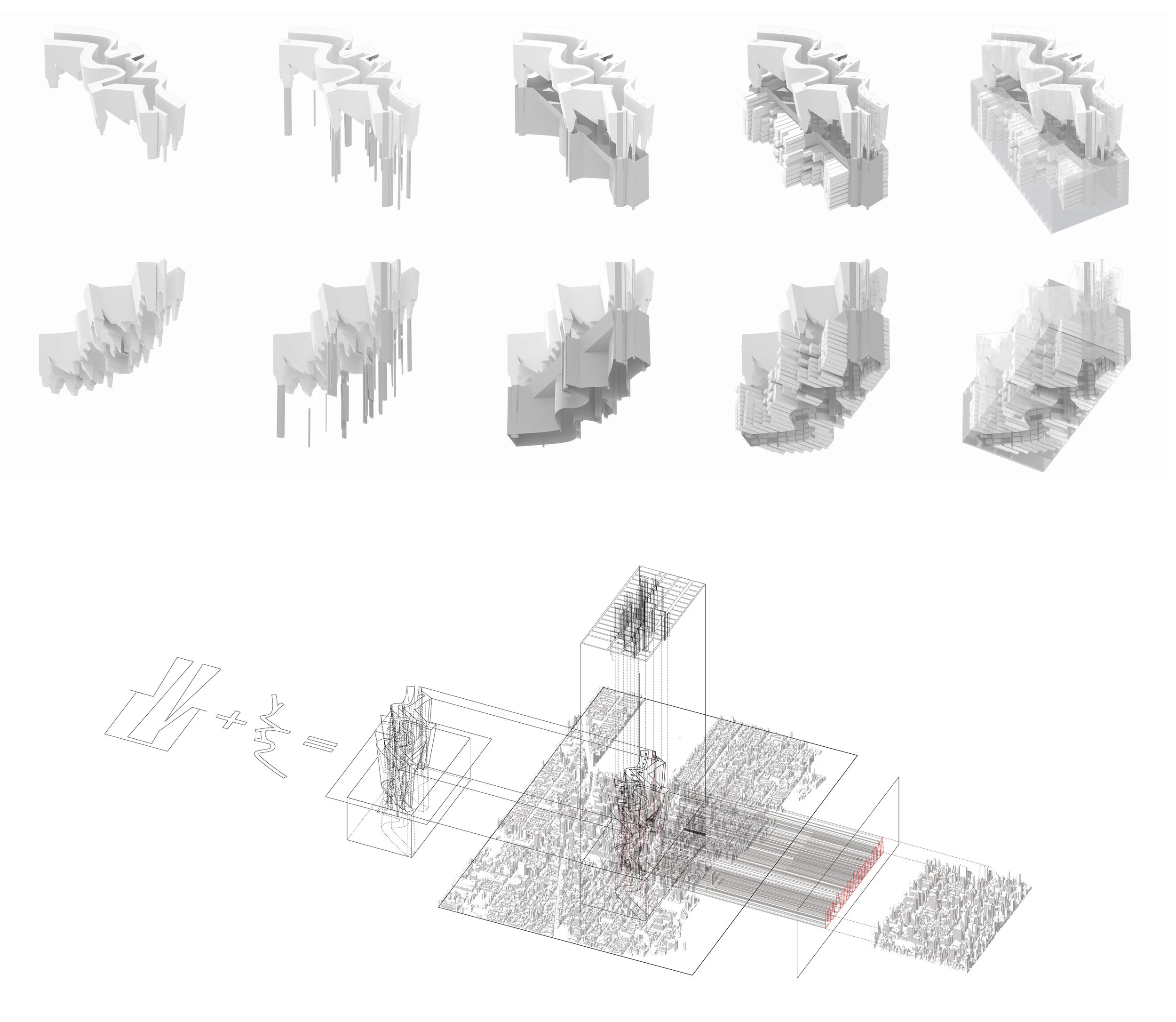
The work explores the tension between the sublime and the stuplime. Grand Central Canyon is approached through two intertwined strategies.
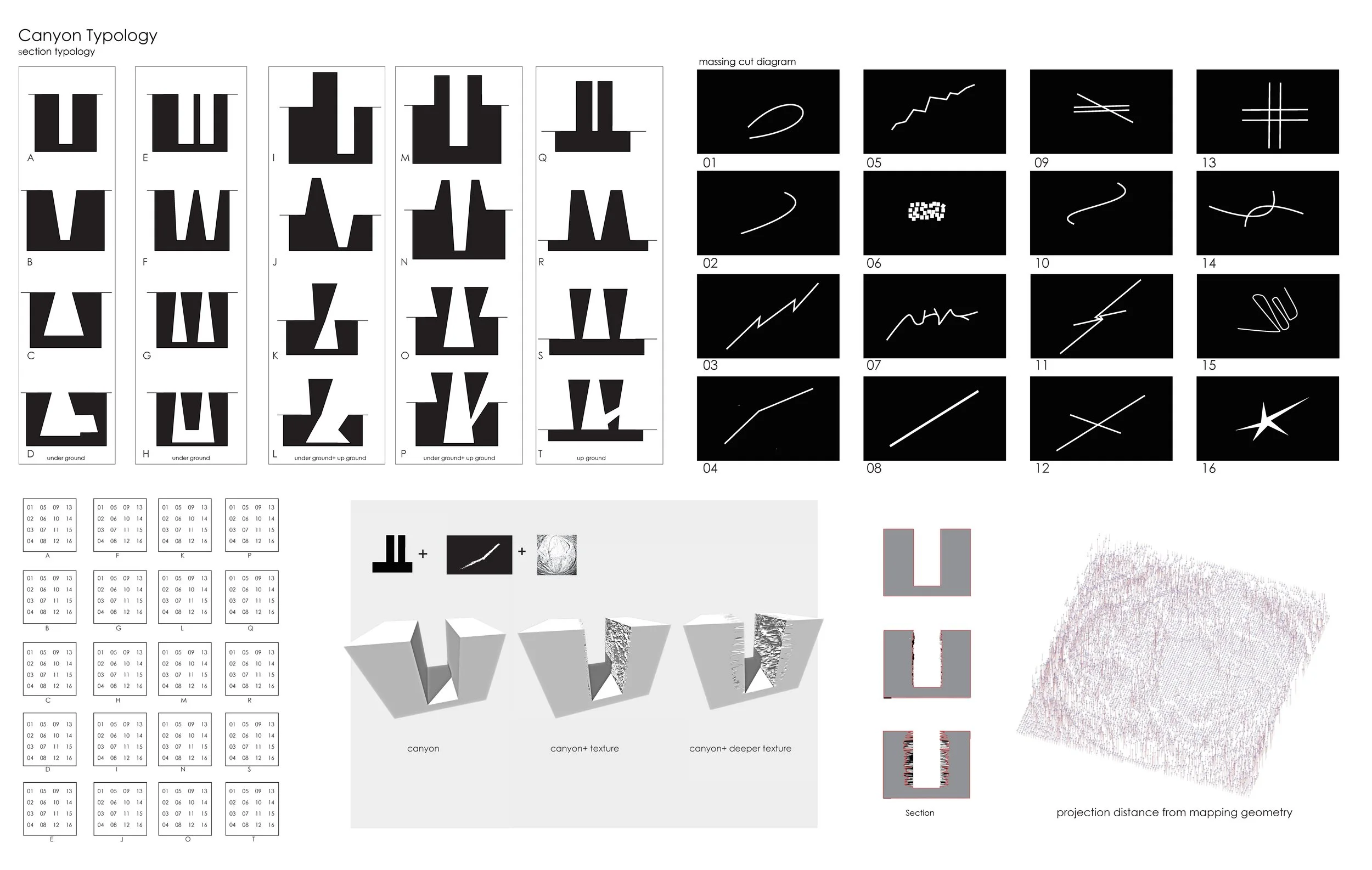
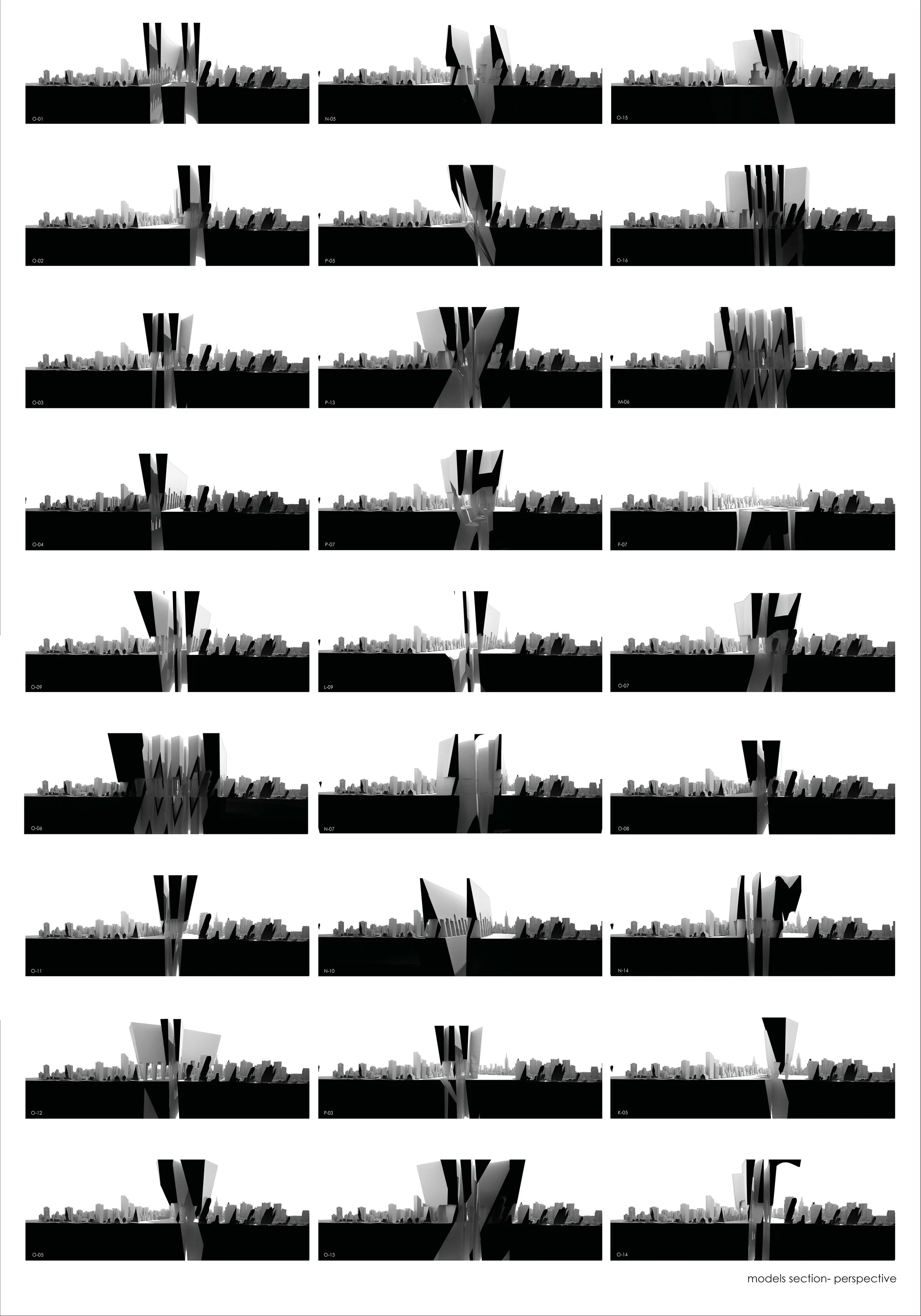
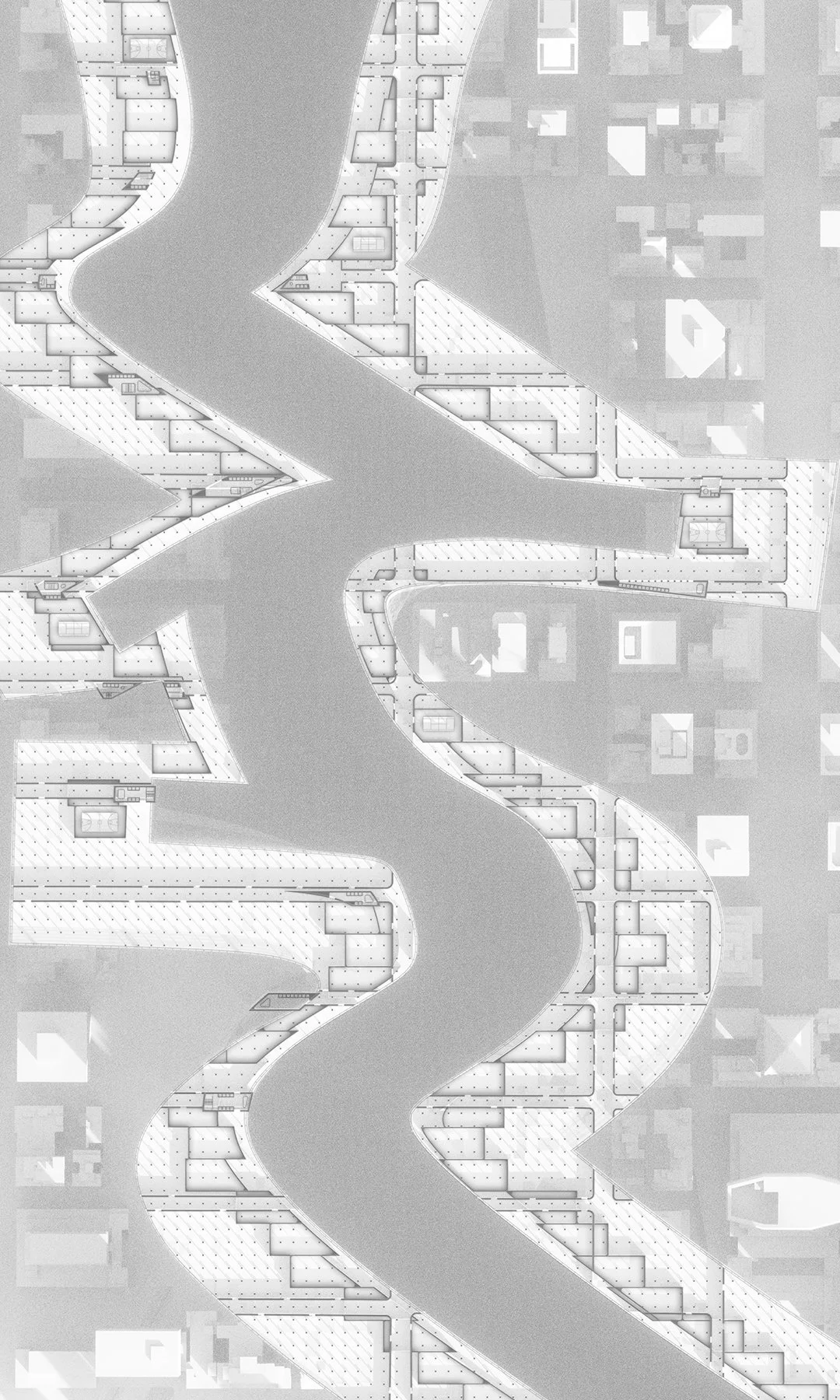
First, the large-scale massing emerges from sectional and plan studies of the canyon, calibrated through contrast and proportion with the site. This process generates a sublime exterior—an architecture defined by vastness, clarity, and spatial intensity.
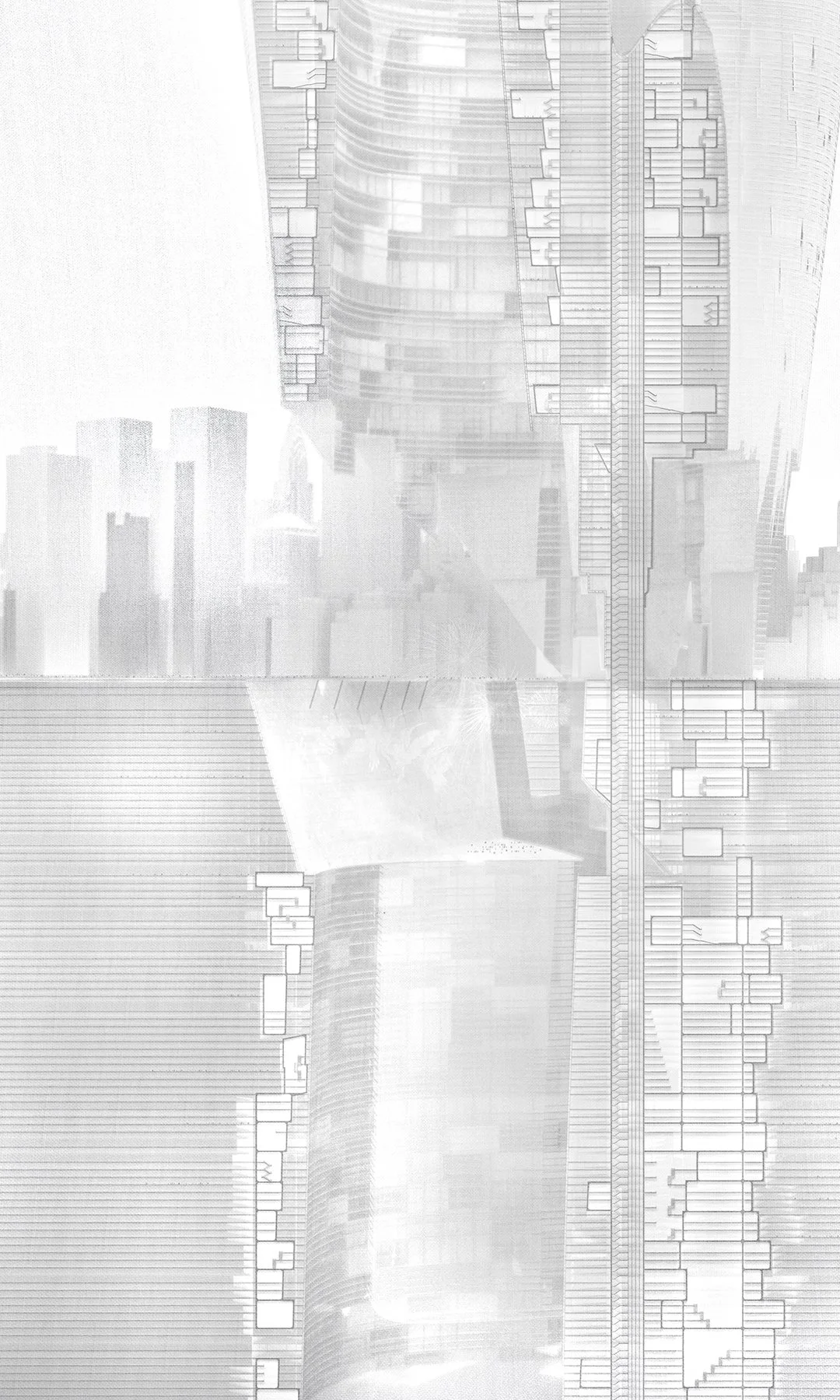
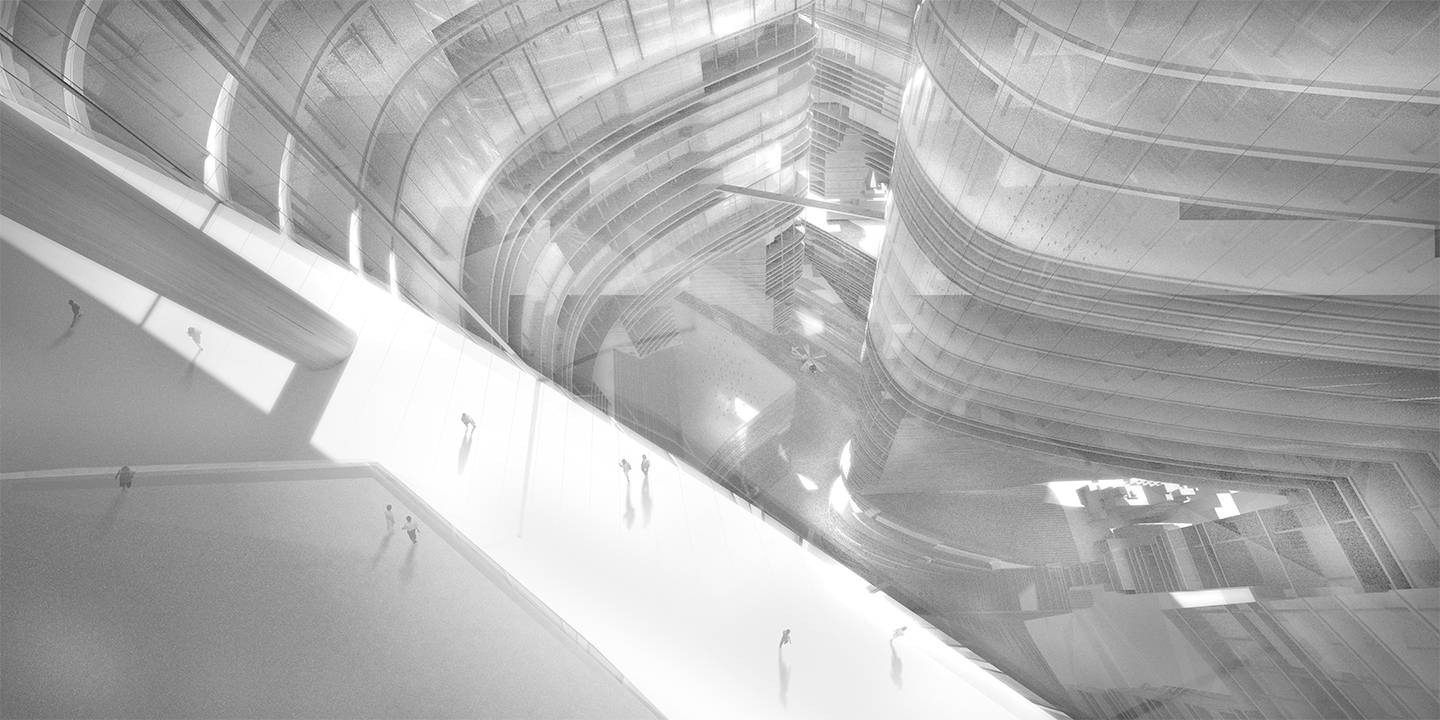
Second, the interior surface condition introduces the stuplime. A dense field of repeating blocks lines the canyon walls, producing a low-contrast texture at a human scale while accumulating into overwhelming detail. Through repetition and quantity, the surface resists singular moments of spectacle, instead cultivating a quiet excess—where monotony and intricacy coexist.
Together, these strategies construct an experiential dialogue: between monumental form and relentless detail, between awe and saturation, between the expansive and the exhaustive.